
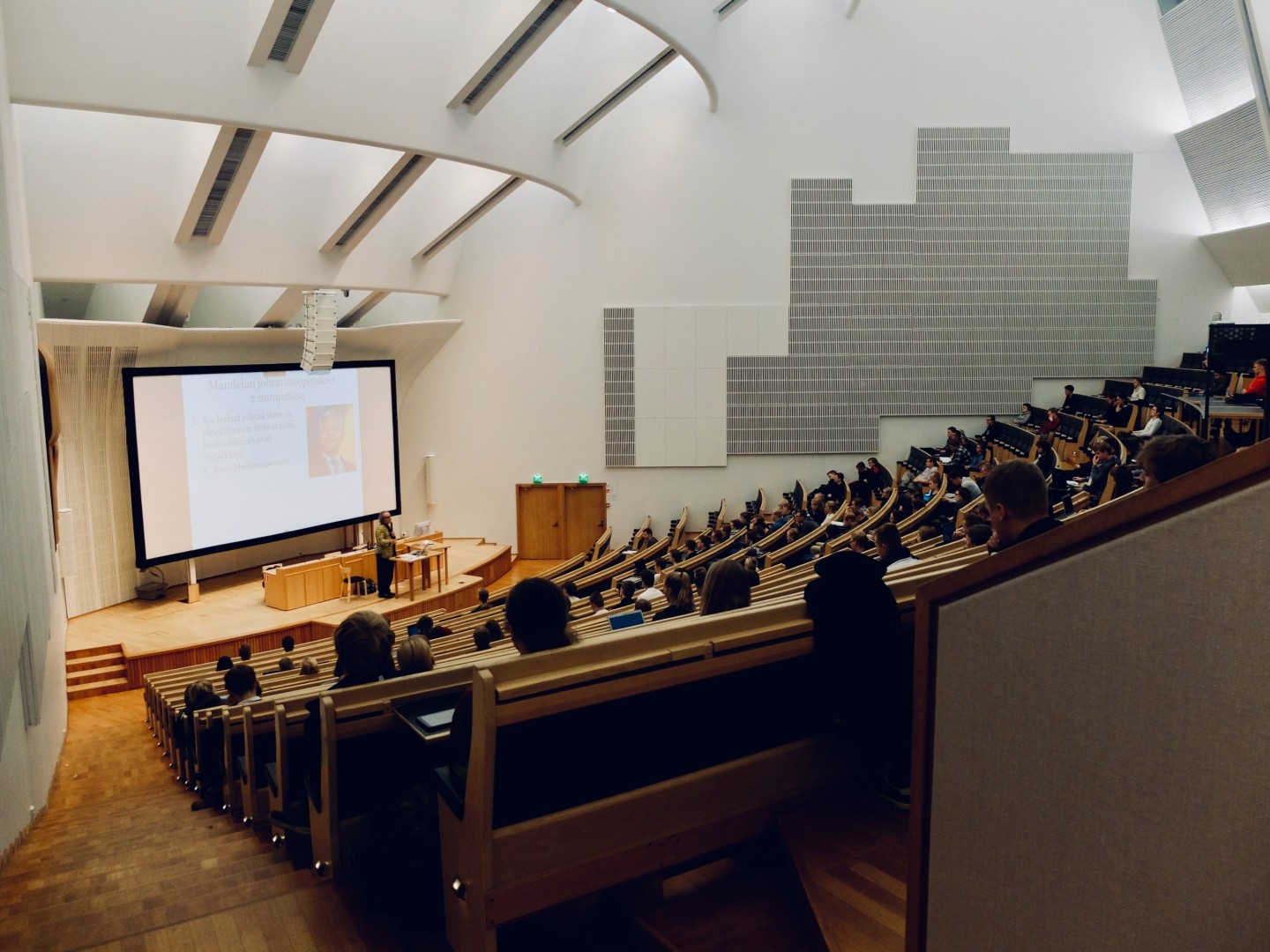
Fragmented student lifecycle
Applicant, student, academic, financial, teaching, and service information can diverge across systems and departments.
Higher education solution
Coordinate admissions, student records, curriculum, advising, registration, teaching, assessment, finance, portals, reporting, and scheduling through a controlled higher-education operating model.
Higher-education processes cross organisational boundaries. An applicant becomes a student; programme rules shape advising and registration; course demand affects section planning; the timetable affects rooms, instructors, and students; grading affects progression; finance and holds affect access; reporting depends on consistent records across every stage.
The WMT higher-education solution combines UniversiTools SIS, UniversiTools Schedulers, and implementation services. Institutions can adopt a complete lifecycle model, introduce a focused scheduling platform, or integrate selected capabilities with an existing SIS.
Applicant, student, academic, financial, teaching, and service information can diverge across systems and departments.
Programmes, prerequisites, holds, capacity, advising, academic standing, and calendars require controlled rules and exceptions.
Students, faculty, advisors, registrars, finance teams, and leaders need different actions built on dependable shared information.
Historical records and connected platforms require ownership, mapping, validation, reconciliation, monitoring, and support.
UniversiTools SIS supports admissions and enrolment, student records, academic structures, curriculum, advising, registration, teaching and assessment, finance, campus operations, portals, workflows, analytics, and data migration. UniversiTools Schedulers supports course, classroom, examination, make-up session, event booking, forecasting, compressed-time, workflow, integrations, and AI Analytics and Insight.
The scheduling engines remain deterministic. They generate 100% conflict-free schedules and timetables according to approved data and hard constraints. AI supports analytics and insight; it does not replace the schedule-generation engine.
Support admissions, registration, student records, academic planning, teaching, finance, portals, workflows, and analytics.
Explore UniversiTools SISGenerate 100% conflict-free academic schedules using deterministic engines and institution-approved constraints.
Explore SchedulersConnect the SIS, identity, finance, learning, scheduling, and reporting landscape through governed exchange.
Explore IntegrationA higher-education programme should account for admissions cycles, registration windows, schedule publication, examinations, grading, billing, and reporting deadlines. Discovery confirms the target operating model, system boundaries, data ownership, historical requirements, integration points, security, testing, and cutover strategy.
A phased rollout may begin with scheduling while the existing SIS remains authoritative, or with lifecycle modules before expanding to portals, analytics, and connected scheduling. Each phase has defined data, users, acceptance criteria, and support readiness.
Clarify objectives, stakeholders, processes, data, constraints, dependencies, risks, and measures before deciding scope.
Agree roles, system boundaries, workflows, integrations, migration, governance, security, and the implementation sequence.
Build or configure through controlled checkpoints, realistic data, representative scenarios, testing, and hands-on user review.
Support adoption, monitor operation, resolve early issues, measure outcomes, and manage later enhancements through change control.
Approved integrations may use APIs, database views, tables, or managed files. Identity and access can be coordinated through approved authentication and user-provisioning approaches. Dashboards and reports can combine operational status with role-appropriate detail.
The integration model documents which system owns each data element, when exchanges occur, how failures are handled, and who supports the interface. This is essential when the institution retains another SIS, finance platform, identity service, learning platform, or reporting environment.
Define programmes, curricula, terms, courses, offerings, students, instructors, rules, and institutional structures clearly.
Assign responsibility for admissions, records, advising, registration, grading, billing, graduation, and data quality.
Give students, faculty, advisors, staff, and leaders access appropriate to their responsibilities and policy.
Students receive clearer access to registration, records, schedules, results, financial information, and approved services. Faculty and advisors gain better context for teaching and progression. Registrars and academic teams gain controlled records, workflows, and scheduling processes. Leaders gain more coherent reporting across the lifecycle.
The specific outcome measures are institution-defined and can include processing time, data exceptions, registration readiness, schedule quality, room utilisation, reporting effort, service response, and adoption.
A clearer path through application, enrollment, planning, registration, academic progress, finance, and completion.
Dependable context for teaching, grading, advising, workload, academic progress, and student support.
More structured workflows, stronger records, better-controlled exceptions, and less repeated reconciliation.
Improved visibility into demand, activity, readiness, service, progression, finance, and institutional performance.
Readiness requires agreed academic structures, term definitions, identifiers, programme and curriculum rules, student status logic, role ownership, data sources, integration contacts, and reporting priorities. The institution should identify which historical data must remain operational, which can be archived, and which must be migrated.
Scheduling readiness also depends on clean course-section, instructor, student-demand, room, time, and constraint data. Good preparation improves both implementation efficiency and the quality of generated schedules.
Name the people who can resolve policy, data, scope, and acceptance decisions.
Use realistic records, scenarios, exceptions, and roles during testing.
Protect time for configuration review, training, communication, and early support.
No. They can be implemented together or independently. UniversiTools Schedulers can integrate with an approved third-party SIS.
Yes, subject to configuration. Campuses, faculties, departments, programmes, plans, terms, sessions, roles, and reporting structures are confirmed during discovery.
Deterministic scheduling engines apply approved hard constraints and data to generate 100% conflict-free schedules and timetables.
Yes. System boundaries and approved exchanges are defined during architecture and integration planning.
The migration strategy distinguishes operational history, archived information, mapping, cleansing, reconciliation, and retention requirements.
Yes. The plan is aligned to institutional milestones and can be phased to protect critical admissions, registration, scheduling, examination, and grading periods.
Next step
A focused conversation can clarify priorities, product fit, services, data, integration, implementation sequence, and the decisions needed to move forward.